


Faster to a working app
Form-, workflow- and approval-based applications can be put in front of users early and refined in short sprints.

Browse by topic
Latest from Diginine
Insights, case studies and updates from the Diginine team.
Service lines
Solutions
Show all solutions Solution
Saka Blancverse
Sales, stock, finance and marketing, plus an AI agent on WhatsApp, in one workspace. Explore solution
 Solution
Salesforce
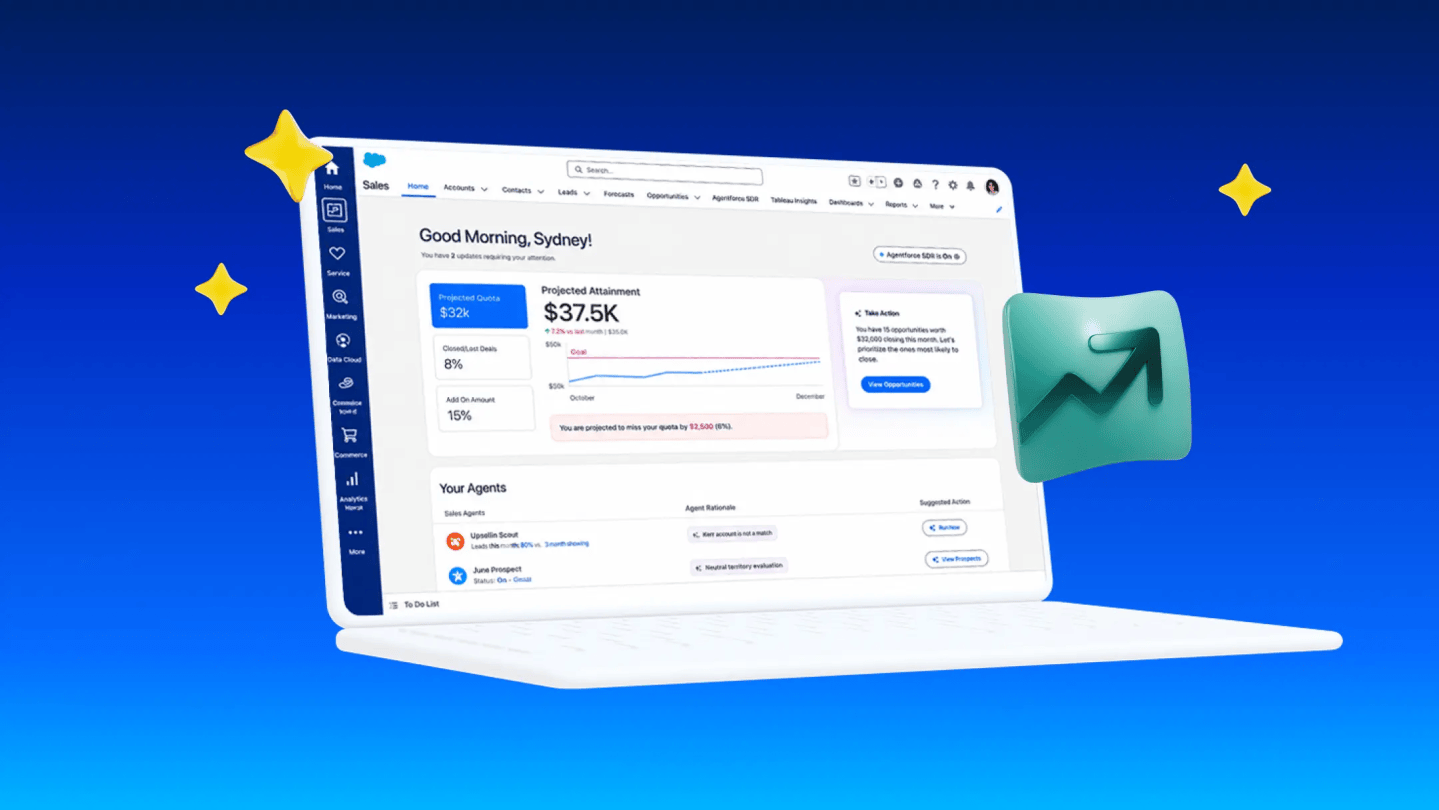
One customer platform for sales, service, marketing and data, with AI agents built in. Explore solution
 Solution
Mendix
Build governed enterprise applications faster, from the first workflow to a reusable digital… Explore solution
One accountable partner, from strategy to operations.


Build web, mobile and workflow applications visually, connect them to the systems you already trust, and scale delivery with governance from day one. Diginine helps you move from the right first use case to a sustainable application portfolio.
Mendix is a low-code application platform owned by Siemens. Instead of writing every screen and rule by hand, teams build applications from visual models: a domain model for the data, pages for the screens, and microflows for the logic. The Mendix Runtime then executes that model.
Low-code does not mean no engineering. When a requirement goes beyond the visual building blocks, developers can extend an app with Java actions, JavaScript actions and custom widgets, so the platform grows with the application instead of capping it.
Because the models are visual, business analysts and developers can read the same thing, which shortens the loop between an idea, a working screen and feedback from the people who will use it.
The value is not just speed. It is delivering the right thing, safely, and keeping it maintainable.
Form-, workflow- and approval-based applications can be put in front of users early and refined in short sprints.
Visual models give analysts, designers and developers a shared language, with feedback built into the way you work.
Consume and publish REST, OData and SOAP services, connect to external databases, and keep your core systems running.
Role-based security, audit trails and delivery pipelines with stage gates help growth stay controlled rather than turn into app sprawl.
From modelling and integration to mobile, AI and deployment, as described by Mendix.
The development environment for creating, testing and running apps. Model the domain, pages, microflows and nanoflows, and security in one place.
BPMN-based workflows with user tasks, decisions, timers and boundary events, for approvals and processes that span people and systems.
REST, OData and SOAP services (consumed and published), external database connection, and import or export of JSON, XML and Excel data.
Responsive web, progressive web apps and native apps from one platform, with offline-first data synchronization and device features such as push notifications.
Platform-supported connectors and modules, plus partner and community components, to avoid rebuilding common building blocks.
Mendix describes Maia as agentic AI inside the platform that plans and carries out development tasks within your architecture and standards.
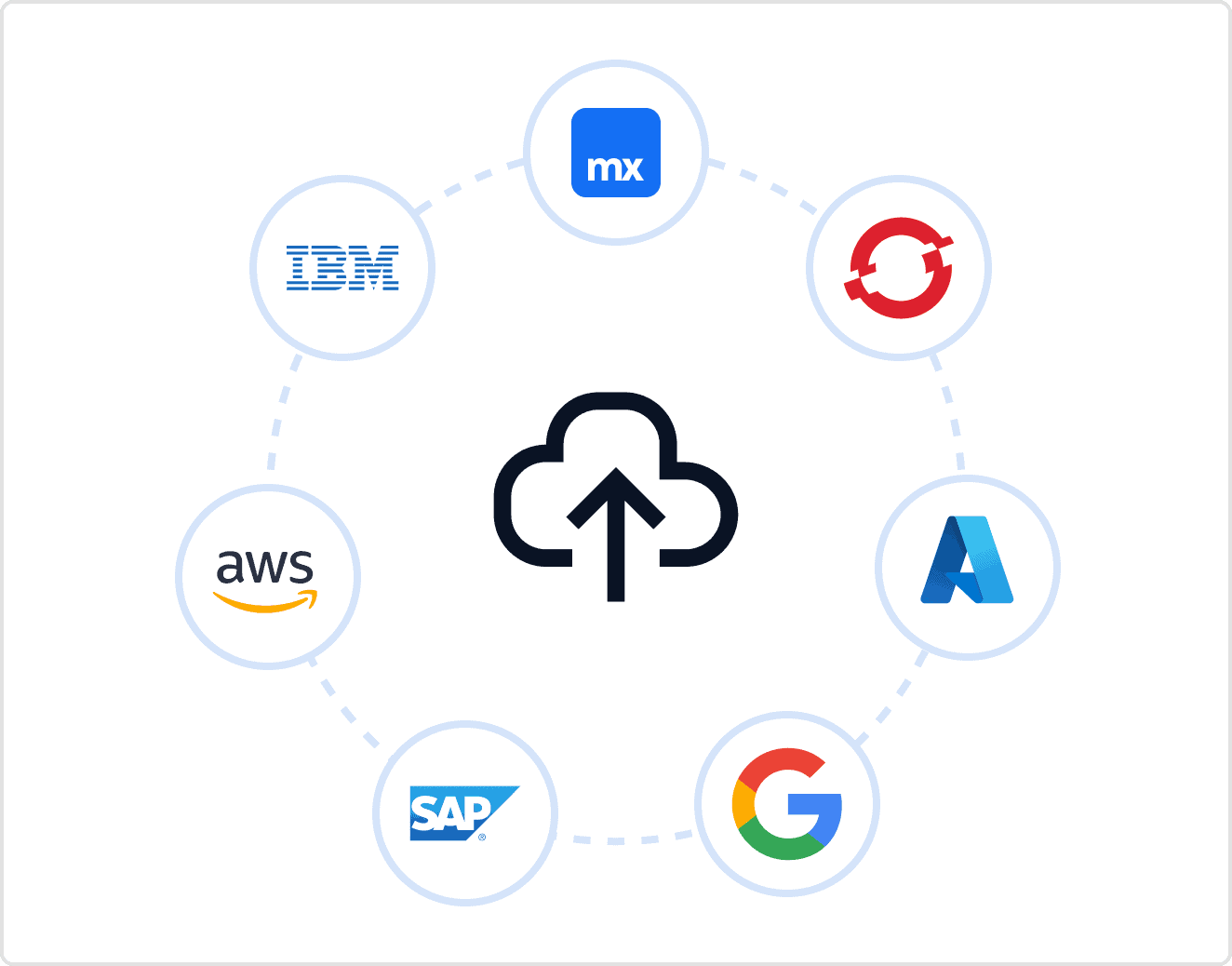
Mendix lists Mendix Cloud, Azure, Kubernetes, OpenShift, SAP BTP and on-premises among the ways to run your applications.
Deployment activity is logged, commits can be linked to user stories, and pipelines can block releases when checks fail.
Register, manage and govern data and services across the organization so teams can discover and reuse what already exists.
A Mendix application sits between the people doing the work and the systems that already hold your operational truth. The visual model defines the experience and process; integrations connect ERP, PLM, quality, inventory, data and other services; the runtime turns that model into a working application.
This makes Mendix especially useful when the business needs a new journey without a risky replacement of every system behind it. The platform can orchestrate people, rules, data and AI while your systems of record remain authoritative.
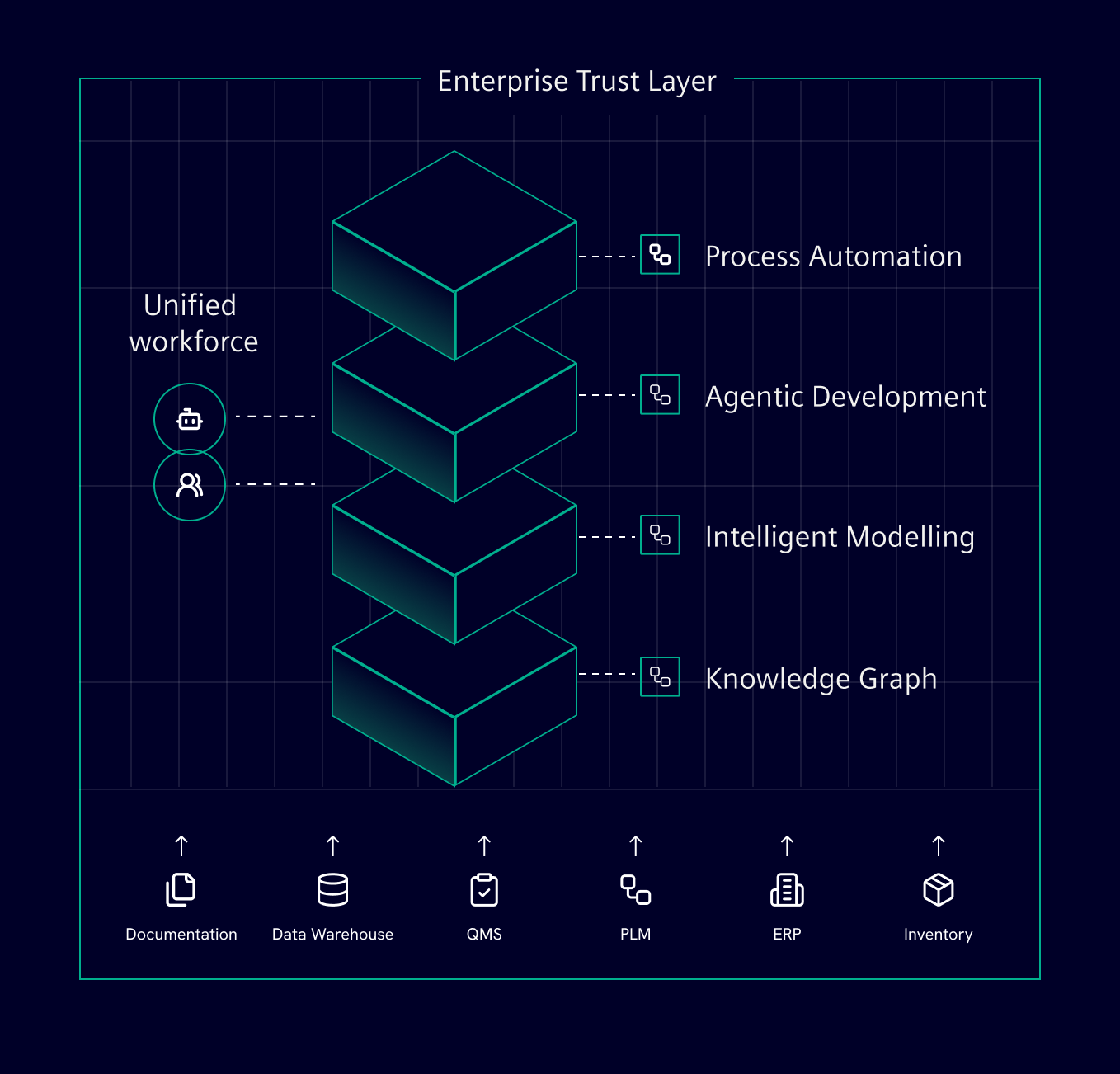
Studio Pro brings the domain model, user experience, application logic, integrations and security into one visual development environment. Teams can review the same model instead of translating requirements through separate documents and codebases.
Low-code does not remove engineering. Java actions, JavaScript actions and pluggable widgets cover requirements beyond the standard building blocks, while version control, testing and review practices keep the application maintainable.

Mendix supports multiple deployment models rather than forcing every application into one hosting pattern. Teams can use Mendix Cloud for an integrated managed experience, deploy on supported public-cloud and Kubernetes environments, or operate in a private or on-premises model where policy requires it.
The decision should follow application criticality, connectivity, data residency, operational capability and recovery requirements. Diginine helps define that target early, so deployment and support are designed into the application instead of added at the end.
Mendix is positioning the platform for apps, AI agents and people working together. What follows is what Mendix itself states.
Mendix describes Maia as the agentic AI inside Mendix. It plans work, carries out multi-step development tasks and maintains quality across delivery stages, working within an organization's existing architecture and standards.
The output is visual models, so non-developers can read, validate and build on what the AI produces.
The Maia Best Practice Check is available in Studio Pro and as a pipeline step. It checks models for anti-patterns, which helps keep fast delivery from turning into hard-to-maintain apps.
Mendix describes an open architecture that lets organizations connect their own knowledge bases, agents and large language models, and integrate with external AI models and tools.
Workflows can mix human and automated steps, so people stay in the loop where it matters.
Mendix states that security, compliance and audit trails are built in, and that policies are enforced centrally across apps, agents and workflows.
Whatever the AI contributes, you still decide who may build, deploy and approve.
Processes with many roles, frequently changing rules and a need to connect to existing systems.
Examples: procurement requests, official-travel approval, performance appraisal, leave and expense claims, document review.
Why it fits: forms, roles and approval chains are exactly what visual models and workflows express well, and the rules can change without rebuilding the application.
Typical integration: ERP, HR, identity and document stores through APIs.

Examples: self-service portals, onboarding, dealer or vendor portals, service requests and case tracking.
Why it fits: a governed front end can sit in front of existing core systems, so customers and partners get a modern experience without replacing what works behind it.
Typical integration: CRM, billing, ticketing and identity services.
Examples: inspections, checklists, work reporting, delivery and asset records captured in the field.
Why it fits: responsive web, PWA and native apps from one model, with offline-first synchronization for places where the connection is poor, and device features such as notifications and location.
Typical integration: asset, maintenance and logistics systems.

Examples: replacing spreadsheets and email processes, or wrapping an old system with an API layer and building new experiences around it.
Why it fits: the stable core keeps running while one complete journey at a time is rebuilt, so users see results early.
Typical approach: vertical slices, not a big-bang rewrite.

Low-code speeds up the right problems, and it is not the answer to everything. A candid view:
A good fit
Less suited
One thing is often forgotten: governance. Apps that are easy to create are also easy to multiply. Without clear rules on who may build what, security standards and an owner for every app, a company can end up with hundreds of small apps that nobody maintains.
Results come from process and adoption as much as from the platform.
Approvals leave chat and spreadsheets and run in one traceable flow.
Users see a working slice early, and what they learn goes straight into the next sprint.
Standards, ownership and delivery pipelines keep a growing portfolio maintainable.
Rules and screens evolve while your core systems stay in place behind APIs.
We start with one journey that is painful, frequent and measurable, and build outward from there.
Choose one painful, frequent journey. Map the people, the systems and the data it touches, and agree what should measurably change.
Shape the domain model, roles, user experience, integration approach and governance rules before building.
Deliver a thin slice that really works, not a prototype, and release it to a small group of users.
Connect ERP, HR, identity and other systems through APIs, in a way you can monitor and support.
Train users, measure before and after, and fix the process, not only the app.
Set standards, ownership and review practices, then repeat for the next journey on the same foundation.
Low-Code Development sits in Diginine's Business Application service line: building and scaling enterprise apps faster on a governed platform. We have delivered Mendix applications for procurement, official-travel requests and performance appraisal, connected to an existing ERP, and run a Mendix delivery pod for Indonesia's largest railway operator.
A delivery pod puts a scalable team of developers and solution architects inside your Scrum teams, with code review and technical governance, so capacity grows without losing control of quality.
No. Low-code suits many enterprise workflow, portal and mobile applications, and Mendix apps can be extended with Java and JavaScript when a requirement goes beyond the visual building blocks. It is less suited to extreme performance needs and high-volume core transaction systems.
Usually not. A common pattern is to leave the stable core in place, expose it through APIs, and build the new experience and workflow around it in Mendix.
Through governance: clear ownership for each app, security standards, role-based access, audit trails and delivery pipelines with stage gates. We help set these up from the first project, not after the apps multiply.
Mendix lists Mendix Cloud, Azure, Kubernetes, OpenShift, SAP BTP and on-premises as deployment options. The right choice depends on your security, data-residency and operations requirements, and we can help you weigh them.
Mendix supports responsive web, progressive web apps and native apps, with an offline database and synchronization for native and PWA apps. Which data to synchronize and how to handle conflicts still need to be designed and tested in real conditions.
Mendix describes Maia, built-in agentic AI that helps plan and build applications, and an open architecture for connecting your own models and agents. We recommend adding AI under the same governance as the rest of the platform, starting with use cases whose data is ready.
Pick one journey that is painful, frequent and measurable, such as an approval flow. After a short discovery we scope a thin slice, build it in sprints, release it to a small group and measure the result before expanding.
Tell us about the journey that costs your people the most time. We will help scope a first Mendix application that is worth proving.
Talk to Diginine
Diginine delivers integrated IT solutions from consulting and system implementation to fully managed services.